Why Does Cold Air Make a Sauna Session Feel Better?
The physical contrast between hot and cold is a real part of what people are chasing when they use a sauna, and winter delivers it without any extra effort. Stepping from a 185-degree cabin into 20-degree air, even for thirty seconds, produces a sharper cool-down than a lukewarm summer evening ever will. Finnish sauna culture built an entire ritual around this exact contrast, alternating heat with snow rolls or a cold plunge, precisely because the swing between temperatures is part of the appeal rather than a side effect to tolerate. A 4-person cabin sited a short walk from the back door makes that contrast easy to repeat two or three times in a single session.
How Does a Sauna Compare to a Hot Tub for Winter Warmth?
Both solve for the same basic winter want, warmth on demand, but they get there differently. A hot tub holds 300 to 500 gallons at temperature around the clock, or close to it, which means constant electricity draw and a real risk of frozen, cracked plumbing if the heater fails during a deep freeze. A sauna heater only runs while someone is using the cabin, then shuts off completely, and there is no standing water to freeze in the off hours. Preheat time favors the sauna too: 20 to 40 minutes to reach temperature from cold versus the hour or longer a tub often needs to recover after a hard freeze knocks its water temperature down. A hot tub does offer buoyancy and a soak that a sauna cannot replicate, which is why plenty of households with the yard space for it end up wanting both instead of treating them as competing purchases.
See also: FormBlends vs Core Peptides: Which Source Is Safer in 2026
How Does a Sauna Compare to Just Building a Bigger Fire?
A wood stove or fireplace warms a room to maybe 75 or 80 degrees on a good night, nowhere close to sauna temperature, and it warms the air in an open space that keeps losing heat out doors, windows, and drafts. A 4-person cabin is a sealed box built specifically to hold heat, so the same amount of energy produces a session two or three times hotter than any living-room fire will manage, in a space small enough that four kilowatts of heater output actually does something. Fireplace ambiance has its own appeal, but as a way to physically warm up after being outside in the cold, a preheated sauna does more with less.
What Changes About Running a Sauna in Winter?
Not much, if the unit is sized correctly. An outdoor cabin loses a bit more heat to the surrounding cold air than it would in summer, so the heater cycles more often to hold its setpoint, but a 6 to 8 kilowatt heater matched to a 4-person cabin’s cubic footage handles this without trouble. The one habit worth building is closing the door quickly between rounds. Every minute it sits open in freezing air is heat the heater then has to rebuild from scratch, which stretches preheat time on the next round and adds cycling wear to the heating element over a full winter of use. Buyers weighing options for the season should compare heater wattage and insulation claims across brands, including the current lineup at SweatDecks, since a unit built for a mild climate may underperform once temperatures drop into single digits.
Does Winter Use Change the Cost to Run a Sauna?
Slightly, but not enough to change the math on ownership. A 4-person cabin with a 6 to 8 kilowatt heater typically costs somewhere under a dollar per session in most electricity markets even accounting for the extra cycling a cold night causes, since the heater is only drawing power during preheat and while holding temperature for an hour or so of use, not around the clock like a hot tub. Households that use their sauna three or four times a week through a full winter should expect a modest bump on the electric bill, generally in the range of a normal space heater used a few evenings a week, not a meaningful jump.
What About Snow and Ice Building Up Around an Outdoor Unit?
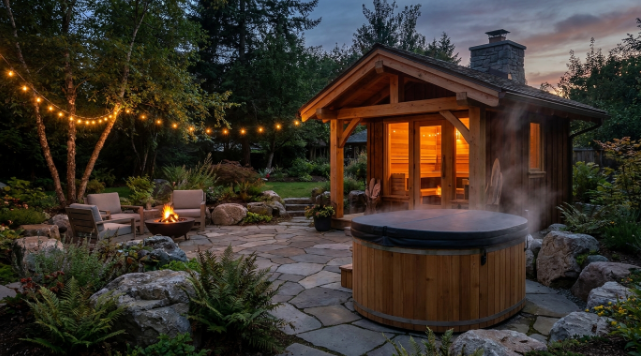
An outdoor 4-person cabin needs a clear path kept shoveled between the house and the door, both for safety on a frozen walkway and to stop snow from packing against the exterior walls where it can hold moisture against the wood longer than it should. A small overhang or covered entry over the door helps keep the immediate threshold clear without shoveling after every fresh snowfall. Roof-style barrel or peaked cabins generally shed snow better than a flat-roofed design, which is worth a glance at before buying if the property sees heavy snow most winters.
What Does the Research Say About Heat Exposure and Cold Weather?
Research on regular sauna use spans multiple climates, including the Finnish cohorts most of the foundational studies come from, where outdoor winter temperatures are routinely well below freezing for months at a time. A review in the American Journal of Physiology covering the effects of heat and cold on health, with specific reference to Finnish sauna bathing, found the cardiovascular and thermoregulatory responses to sauna heat hold up consistently regardless of outdoor season. A broader review in Mayo Clinic Proceedings summarized associations between regular sauna bathing and favorable cardiovascular outcomes across similar cold-climate populations. These findings describe population-level associations in people who used a sauna regularly over years, not a guarantee tied to any single season or session, and anyone with a cardiovascular condition should check with a doctor before starting a new routine, winter or otherwise.
Frequently Asked Questions
Can a 4 person sauna run outdoors in freezing temperatures? Yes, a properly insulated cabin reaches 170 to 190 degrees inside regardless of outdoor conditions, though the heater runs a bit longer to recover heat lost when the door opens.
How does a 4 person sauna compare to a hot tub for winter use? A sauna heats up faster from cold and costs less to run continuously, while a hot tub offers buoyancy a sauna cannot match.
Does cold weather increase a 4 person sauna’s operating cost? Slightly, since the heater cycles more to hold its setpoint, but a well-insulated unit still typically costs under a dollar per session.
What is the biggest mistake people make running a sauna through winter? Leaving the door open too long between rounds, which forces the heater to rebuild lost heat and stretches out the next preheat.
References
- Effects of heat and cold on health, with special reference to Finnish sauna bathing, American Journal of Physiology – Regulatory, Integrative and Comparative Physiology, 2018
- Cardiovascular and Other Health Benefits of Sauna Bathing: A Review of the Evidence, Mayo Clinic Proceedings, 2018
- Does the Combination of Finnish Sauna Bathing and Other Lifestyle Factors Confer Additional Health Benefits? A Review of the Evidence, Mayo Clinic Proceedings, 2023
By Tom Halloran